
Why that's okay (you don't need her to - yet...)
Often, good, big-hearted, hardworking guys get blindsided because… she just doesn't want to work on the relationship anymore.
There are some extremely effective ways we can shift that dynamic, ones that helped me massively when I was there.
And when I was there?
- She didn't want to go to couples counselling (we did, one session and never again).
- She didn't want to talk about what might change her feelings (she didn't know either).
- She didn't want to talk about the kids, or the future, and she didn't want to sit down and try to work any of it out.
She just wanted to get out of the conversation, out of the room, out of the house, as fast as possible.
That is, until I began to rebuild some of the crucial pillars of the relationship on my own...
So let's get into discussing how we can start to rebuild on our own like that, from your side, and save your family the heartache.
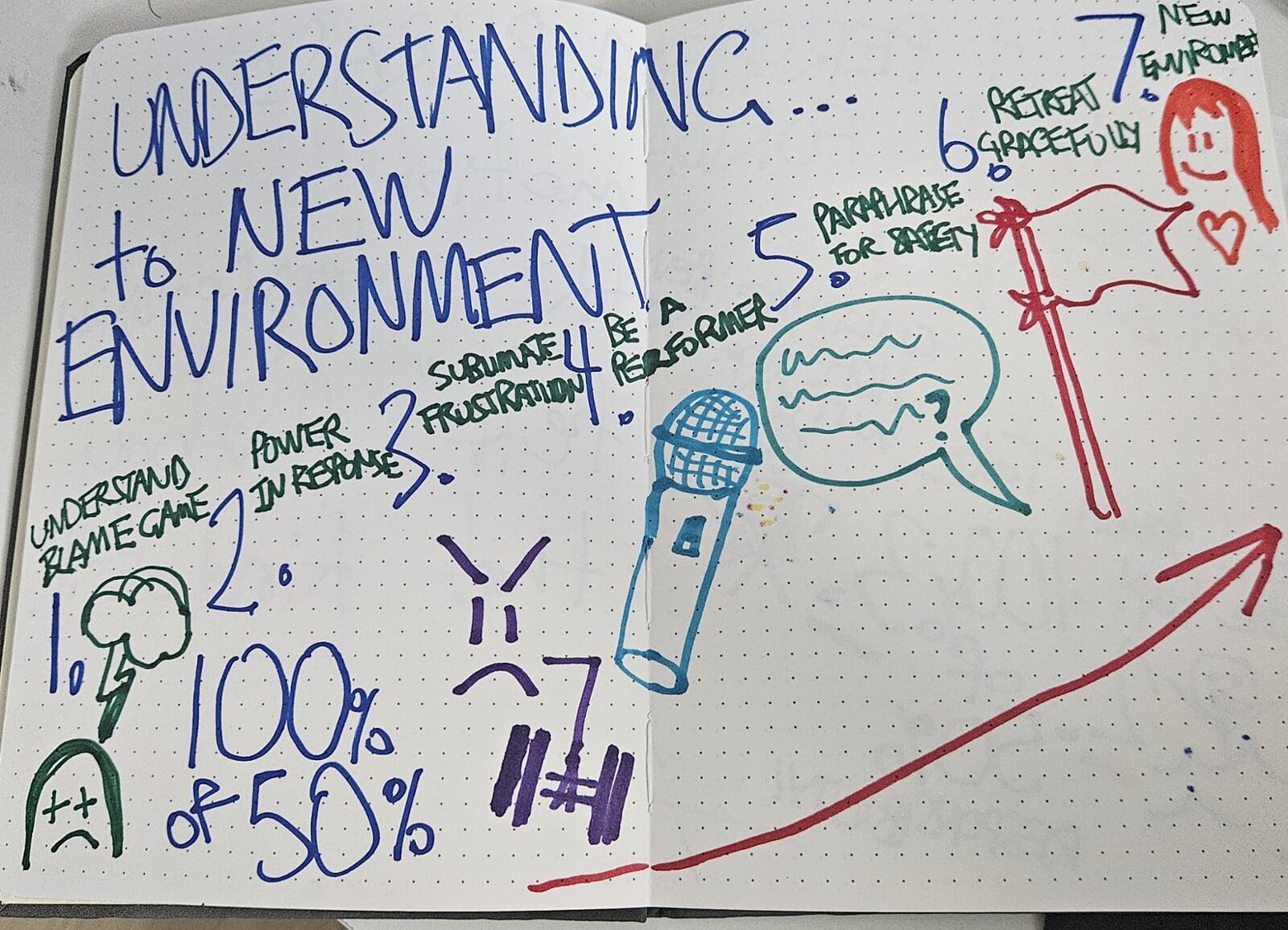
I'm gonna explain in seven steps, starting with understanding WHY she’s demotivated in the first place, and ending with how to create a new environment that inspires her to actually WANT to work on things too.
1. Understand Her Exhaustion - The Blame Game
The 'blame game' is a vicious cycle:
- After years of build-up, she feels frustrated, and reveals her true inner state.
- To you, it feels like blame, because you have been doing your best.
- You get defensive, even if you try to speak calmly, reasonably...
- She feels defensive in turn, because your denial of fault invalidates what she's expressing.
- She blames you back, this time with more fire...
- And round and round we go.
When it comes to blame, even if neither of you are saying it, you're both thinking it, and it's heavily implied by the tone and the mood.
This goes around and around, with everybody growing rapidly more defensive and emotional - mad and sad and ultimately hopeless.
But her demotivation isn't coming from ill-intent; it stems from past emotional exhaustion, and a belief, fueled by confirmation bias, that "things won't change."
(Quick sidenote: confirmation bias is a tendency all humans have, to subconsciously seek out and favour the evidence that supports our existing beliefs).
My wife described it a few years ago like this:
When we first got married, it's like we were in a canoe together, rowing as a team.
But over time, with kids and life stressors, the canoe flips in the waves, and storm clouds gather overhead...
I was swimming to save myself, unaware she was barely keeping her head above water.
Feeling unheard and unhelped, she swam for the shore alone.
My own frustration, impatience, and defensiveness had only created a more and more hopeless environment.
Patience would've been key.
And patience can be boiled down to: figuring out what to do in the meantime.
For me, that meant continuing to create the right environment. By understanding her exhaustion and the confirmation bias that "nothing can change" you break the cycle of the blame game, and open a path for that change to finally begin.
2. Find Your Power by Taking 100% Responsibility for Your 50%
Nothing creates frustration faster than casting responsibility outside of ourselves. A simple example: try to blame your (young) kids for not tidying up after themselves, and see how quickly they cast the blame onto their siblings, their screen time running out, their not knowing where anything goes...
The house becomes Blame Central in mere seconds. It takes a lot longer to sort out than it would have taken to just do it ourselves...
But, instead of doing that (and still blaming them in our hearts, and the next time the tidying needs doing...) we can ask ourselves what our 50% contribution should be?
Maybe we can have a conversation with them. Kindly seeking to understand what's stopping them? Helping them understand what needs doing, when it needs doing by, why it needs doing, and how to do it...
That responsibility of ours changes the environment for them, and the tidying finally starts getting done! We took 100% responsibility for our 50%, so they start to take care of theirs.
Essentially we want to reclaim our power in the relationship by taking '100% responsibility for our 50% of the problem.
This isn't about accepting all blame. It's about focusing solely on what you can control: your actions, your growth, and your mindset.
You can't change her, but you can profoundly influence the relationship's environment through your own accountability.
Power flows wherever you point the finger. When we point it at others, our power flows out. Point it at yourself—your words, actions, behavior—and the power flows in, enabling you to finally move things forwards.
3. Convert Frustration into Fuel - Sublimation
I mentioned patience before? And figuring out what to do in the meantime? Well, there are going to be plenty of times at the beginning where the frustration starts to rise, like a slowly boiling kettle on the stove, and we're no longer waiting - we're building up to starting all over again.
So one of the most effective things we can "do in the meantime" is catch that frustration - that extra fuel - and channel it into something positive. So we channel negative emotions like anger and frustration into productive self-improvement through a process called "sublimation."
For example, when my wife responded to my outbursts with, "I don't much care if we do divorce," I felt incredibly frustrated over the following days.
I learned to redirect that energy into productive pursuits - hitting the gym harder and diving into my coursework. Each rep in the gym, each lesson, was a deliberate act of choosing growth over self-righteousness and impatience.
Home improvements, more muscle, more socialising, more outings with the kids, more practice of the communication skills I was learning, not only got me out of my rumination, out of feeling powerless, but had the added effect of inspiring a little admiration again from my partner.
And this sublimation into effort and patience is only really the beginning...
4. Become a "Performer": Making Your New Self a Lifestyle
As all these self-motivated activities, this environment, begins to become a habit, we can lean into that. We adopt our new, becoming self as a permanent lifestyle. It's not a temporary act. A good mental model for this is to think of a performer, like an athlete or a hero in training. A 'Performer' doesn't just show up for the big game; they train relentlessly in private.
Your growth must be authentic and consistent, continuing behind closed doors and out of sight. It's not just a performance for her benefit.
Performers embed their craft into their lifestyle.
As I said above, one thing we work on is to master new communication skills, and the performer does that by: practicing with friends, family, and colleagues.
These are skills we didn't learn growing up, but they're no less real than what we did learn (what we absorbed from parents and friends). They're just healthier. They just steer things in a better direction.
And it's easy to become that performer, the person who can deliver the right words with ease, when we've practiced. Nerves and awkwardness come from lack of preparation; consistent practice builds confidence.
This is not about being 'performative.' That's where people keep their focus on their hidden selfish intentions, and just use manipulative tactics to exploit vulnerabilities - a path guaranteed to fail long-term. Instead, when you're focused on your responsibility, you're sublimating any frustration, you can have more balanced intentions:
- genuinely positive for her expressed wants (which right now might be space, freedom, and understanding)
- and for what you want
- and just intrinsically aligned with the kind of person you want to become.
We're not claiming to be perfect or selfless. We're not pretending we want nothing. We're only working on creating that better environment, regardless of whatever she's doing.
5. Rebuild Emotional Safety with Deep Paraphrasing
We talked a bunch there about new communication skills. One of the best is the Paraphrase, where we can enjoy a conversation (like old times), and rebuild emotional safety while doing it.
When she's demotivated, she needs a safe space to express herself without judgment. This skill is about changing why we listen, and why we speak. Most people listen only to reply. We're going to be listening to understand, not to "reply" or fix. Done right, the paraphrase creates bulk emotional safety, by genuinely showing you get her perspective. It also helps you when you're in this frustrating place of her not wanting to work on things - it’s much harder to stay angry when you truly understand someone’s reasons.
The best way to remember these skills so we can actually use them is by jotting down an acronym, which for the Paraphrase is L-U-E-C - R (and the R is kind of separate, so LUEC and then an extra Step R). When I was trying to learn these I'd just put it on a post-it and stick it somewhere on my desk.
L.U.E.C. - R. Steps:
Label: Tune into her feeling and label it.
For this example, my wife often talked about feeling "overwhelmed."
So when I heard her talk about her day, or the kids, and I thought she might be feeling that way, I'd start with something like:
"You're maybe feeling a bit overwhelmed."
Understand: Understand what interpretations and inner stories might be behind those emotions.
"I'd be feeling overwhelmed as well. There's way too much coming at me..." then a little bit about why you might feel that way, in her shoes.
It's a gradual process of growing your emotional literacy, and practicing putting yourself in the other person's shoes, but you can begin to Understand the roots of the feeling you labeled.
Example: Think of your own similar experience (don't always share aloud). So you've labeled it, you've understood it, you offer a relatable Example of your own, like where you felt similar:
"I remember when I started at that new job and they gave me seven new studies all at once... everyone was asking me for this and that and come to this meeting. And I hadn't even finished the basic training yet."
Clarify: You don't assume that you've got it right. It's a conversation. You've given an example when you felt similarly overwhelmed and then you Clarify:
"Is that kind of it?" or "is that kind of what you felt? " or "Is that kind of close?"
Recap or Repeat: The reason this step is separate - there are two ways to go after you've completed the L.U.E.C part, and passed the mic to her.
Option 1 - we repeat the steps.
Maybe she talks more about how she's feeling. You paraphrase it again, you understand a little more. She feels a little more understood. You go around and around that loop, you paraphrase the next thing she's said. There's no need to end this loop if you're both enjoying the conversation.
Maybe you even chat till one or two o'clock in the morning, and she starts saying things like, "Yeah, that's exactly it. Wow. I haven't chatted with someone like this since I was in uni sleeping over with my best friend." We had that exact moment just a few weeks into our reconciliation journey, and it was incredibly powerful.
Option 2 - we recap everything you've talked about so far.
This should come after you've already gone around repeating the paraphrase a bunch, and she has responded to the Clarify with something like the example I gave above: "Yeah, that's exactly it."
When you hear something like that, it's your cue to recap. You recap all the things that you've talked about, and when you've recapped everything, what she's felt, what's been happening, you ask again (just like the Clarify step) - "Is that kind of it?"
If you've recapped well, and after enough safety and her feeling understood, that might be a great point to end it, to move on to lighter topics, or wherever she wants to take it.
You've most-likely banked a lot of restored safety, and chipped away at some of her confirmation bias.
This is not about just agreeing with your partner, or pretending to listen (because you have to listen, if you're gonna paraphrase it - you're not gonna be able to label jack-shit if you weren't really listening). It encourages you to do one of the things that's most commonly missing in modern-day relationships. It encourages you to really listen to your partner. It's a new, better way for the two of you to communicate and connect. It's a win-win.
Sidenote: you'll notice that whenever I teach these communication skills, I don't prescribe only one script with specific wording. I only give examples.
That's intentional - the way YOU speak, the phrasing YOU use, combined with your focus on understanding the first principles behind it, is what will make this a natural part of your lifestyle. This is how it starts to feel genuine, despite the confirmation bias she will have towards you... because it IS genuine.
It's not enough to learn WHAT to say, we need to think about WHY and HOW we say it.
6. Know When to "Retreat" Gracefully
When strong resistance inevitably resurfaces, we don't want to lose the patience we've been working on (and break the new environment we've been creating). Therefore, knowing when to 'Retreat' gracefully is key. This isn't giving up; it's respecting her boundaries while affirming your good intentions, preserving safety, and preventing escalation. Use the Retreat skill, or think of the acronym W.I.T.O.:
Witness: State what you observe without judgment (e.g., 'I feel like you've gone a bit quiet').
This is similar to labelling, but instead of an emotion we're looking at the observable, external expression - their not talking, their anger, etc. - the part that's on display.
And again - we're not judging her! This should come with a tone of: "thank you for expressing that!" - it is a GOOD thing when our partner expresses their emotions.
If we don't know about a problem, it's still a problem, we're just rendered powerless to solve it. So we should thank them.
Intentions: Briefly share your positive intent (e.g., 'I wanted to help by understanding how it's been').
The key here is that our intentions should be balanced. We should be thinking - "what's in it for her, and how do my intentions align with the actions of the kind of guy I want to become?" Not just "here's what I wanted, and why I think that's reasonable."
Unbalanced intentions, and nothing we do will work.
Trust: Reassure her that you trust her decision-making ('I believe you'll bring this up again when you're ready').
This is similar to something from the book How to Win Friends and Influence People, by Dale Carnegie, where we give the other person a great reputation to live up to. Reciprocity is a powerful force for good.
We essentially keep the faith in her goodness (if you're not feeling that right now, remember who she WAS to you, and remember: the way she's acting now is not how she acts with everyone else - ergo, she's still that person. Have faith in her).
Open the Door: Clearly state your availability to talk again when she's ready ('I can hang here quietly or give you some space, but I'm here whenever you want to talk again').
This allows her space and time to process, but leaves the conversation open for a better time.
It also flips her expectations and helps defeat confirmation bias: she's probably expecting you to sulk, stay mad, or storm off. Instead, you're staying close by, and leaving the door open.
7. New Environment = Her Motivation
Your consistent use of all these steps creates a new, predictable, and safe environment. This environment can inspire her to feel safe, to think again, and to potentially re-engage.
As she feels understood and safe, the 'confirmation bias' that things couldn't change will erode, and hope will return.
Conclusion
By consistently applying these seven steps, you're starting to create change all by yourself. You'll become the person who can rebuild trust and inspire those deep connections, regardless of how demotivated your partner might seem right now. This journey transforms not just your relationship, but you as well.
Remember, your journey to a thriving relationship starts now, one intentional step at a time. Keep walking.
PS - hopefully what I’ve said here helps you to make sense of wherever you’ve been stuck. If you follow everything in these blogs and vids, and actually put it into practice, you’ll be well on your way already.
Once you’ve done that, and you’re beginning to see some positive signs, that’s where most people realise: it’s extremely challenging to do it alone.
It’s hard to know whether you’re doing everything the right way…
It's hard to stay consistent…
It's hard to know if you’re doing enough to tip the scales…
If you’ve been viewing our stuff for a while, and find yourself in that place, that’s when I'd encourage you to take the next step, and watch our First Step Video.
It's 46 minutes, where I explain how we help guys like you bring their relationships back from the brink.
I'll also explain the three pillars that form the basis of all healthy relationships.
Just understanding these, and keeping them in mind, will be a big first step towards saving your marriage.
Set aside a lunchbreak, or sit in your car, and give it your full attention....
Because this is where you start to turn things around.
PPS - if you're not there yet, check out the video on the above topic instead!